A quarter of a century ago, after repeated rejections of a life-extending breast cancer therapy by the Pharmaceutical Benefits Advisory Committee, Australia faced a choice.
The choice was orthodoxy or humanity.
The then health minister, Dr Michael Wooldridge, chose humanity.
In a letter to Prime Minister John Howard, Dr Wooldridge, who invested significant time in drafting the letter, laid out the impasse over Roche’s HERCEPTIN. The committee had rejected it multiple times due to cost.
He made the reality clear. This was a therapy often used by younger women, many of whom were mothers. The benefit was not theoretical. It was time. More birthdays, more school runs, more ordinary days that suddenly matter when they are scarce.
Then came the moral fulcrum. Dr Wooldridge wrote that it was deeply troubling that our institutional frameworks were denying women over what amounted to a few thousand dollars.
That sentence should still haunt us. Maybe we have all become accustomed to it, given the institution's extraordinary consistency, and by consistency, read obstinacy and stubbornness.
Prime Minister Howard agreed with Dr Wooldridge. The therapy was funded outside the PBS through a separate program. A workaround, yes, but also a statement. When the system fails, as it did, leadership must intervene.
It was, in the end, a simple choice. Humanity overrules a dogmatic adherence to what can be a cruel orthodoxy.
One PBAC member resigned in response to the decision. It was a confession.
The same system that baulked at funding life-extending cancer treatment would go on to recommend subsidies for erectile dysfunction medication. The latter became the first recommendation formally rejected by a minister. Yet the contrast speaks for itself. The problem is that it did not spark wider change.
Fast forward to Canberra this week.
At an event hosted by Novartis, a young mother diagnosed with breast cancer at 38 described what the system looks like from her experience.
Not in policy terms, but in lived experience.
She spoke of paying for her own mammogram because she was under 40 and did not qualify for funded screening. Of covering childcare while undergoing treatment. Of the strain that required marriage counselling just to hold a family together under pressure.
The sadness is that her experience reflects the system's design. None of that lived experience matters.
In a health system defined by rationing, humanity is not a principle. It is a possible consideration by a leader. Applied inconsistently, often reluctantly, and usually only after pressure becomes unbearable.
Patients are expected to navigate it quietly. To be grateful. To accept that 'the institution knows best'.
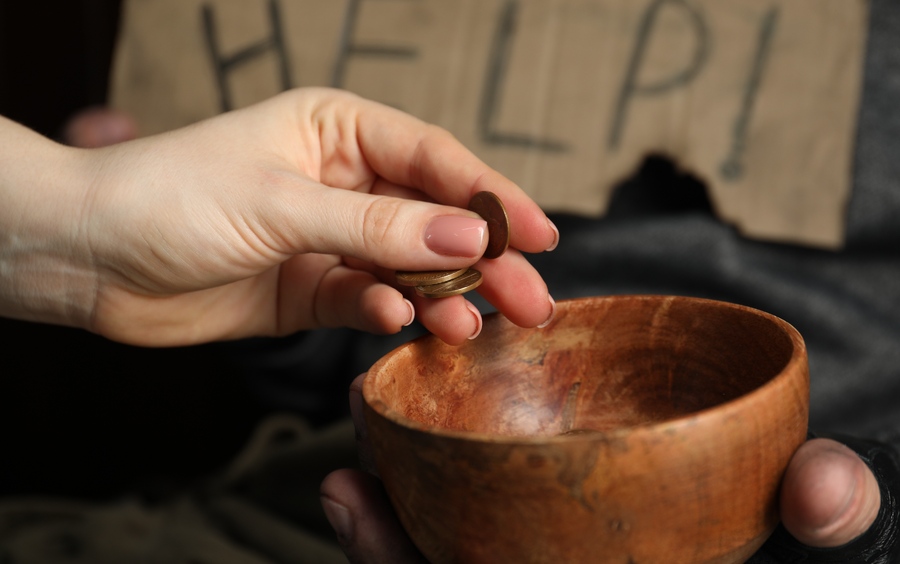
It is the begging-bowl mindset that often rules decision-making.
Vicki Durston, speaking for Breast Cancer Network Australia, gave voice to the frustration many feel and often express. The barriers are not incidental, she said. They are structural. Access, affordability, continuity of care. These are all mediated through a system that prioritises cost centres over people.
Yes, there has been progress. The Albanese Government has taken steps to improve access to some women’s health products. Health Minister Mark Butler deserves credit for that.
But partial reform is not the same as systemic change.
Why must patients fight, case by case, for consideration that should be automatic? Surely, we all deserve the same treatment.
More troubling still was the message delivered by one government representative at the event. It was an unfortunate exception, with other speakers, including an assistant minister and the shadow minister, speaking respectfully, compassionately, and from the heart.
Yet, this one member of parliament told patients and advocates to narrow their demands. To be more realistic. To moderate their expectations.
As if the problem were the patients’ ambition for change. Who is serving whom?
The suggestion that geopolitical constraints, invoking Iranian mullahs, no less, should temper the demands of people facing life-threatening illness was worse than tone-deaf. It was emblematic.
It revealed an instinct that runs deep within institutional Australia. When confronted with human need, deflect, delay, and dilute. It was condescension writ large.
There have been many excuses by many Governments over the years. It must be the first time the Ayatollah has been blamed for denying healthcare in Australia.
For patients, it means they are directed to ask for less. Expect less, and settle.
Even if they misspoke, we all know the demand that patients limit their ask is the system's consistent refrain. Yesterday's invocation of the Ayatollah was just a new justification.
As if the demand is an unreasonable inconvenience for our privileged parliamentarians, who enjoy a smorgasbord of perks that would make a private equity leader blush. Any chance the Ayatollah's impact will spread to curbing the benefits enjoyed by our elected representatives?
It is unlikely.
They are chauffeured around Canberra and other parts of Australia in a government-funded fleet of expensive cars. Taxpayers fund designated parking zones at Australian airports to accommodate this fleet and ensure convenience and timeliness for our elected representatives. Any chance the Ayatalloh will be invoked as an excuse to curb these perks?
Yesterday, a young mother shared her personal story of having to fund the cost of travel to access cancer care.
Do as I say, not as I do.
Patients face the not-so-quiet demand driven by the doctrine of rationed care. It is true for patients with any cancer or chronic condition.
The lesson from the HERCEPTIN decision is the opposite. When the system draws the line in the wrong place, the answer is not to ask patients to step back. It is to move the line.
At its core, this is a question of values.
What is the worth of a few more years of a mother’s life?
If our institutions cannot answer that without hesitation, without caveats and ridiculous excuses, then they are not merely failing. They are forgetting why they exist.