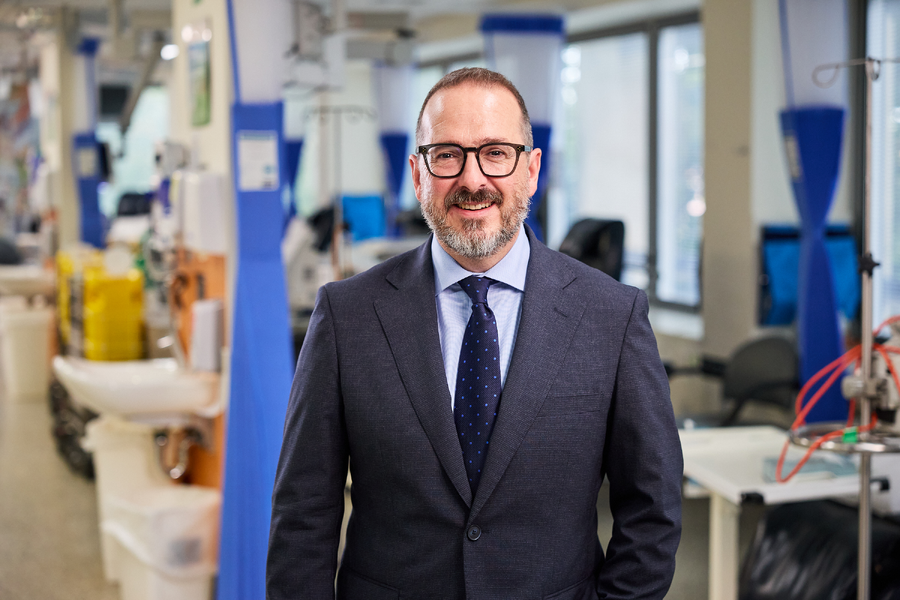
Owen Smith, General Manager for Bristol Myers Squibb in Australia and New Zealand, used his keynote at the BPDInsights and BioPharmaDispatch annual conference to deliver a direct challenge to the way Australia values and pays for new medicines.
Smith, a member of the Medicines Australia board, said the science is advancing faster than perhaps at any point in history and warned that the policy framework to allow access to that innovation is failing to keep pace, especially in Australia.
He described the result as a growing yawning gap between clinical innovation and the system's ability to absorb it and provide patients with access.
Smith made the human consequences plain. He cited surveys showing that 43 per cent of Australians are prescribed medicines that are not on the PBS and must therefore be paid for privately. He noted that 16 per cent of those people are choosing between food and medicine. He said, "That's not a policy abstraction. That's a reality that you've got patients who are standing at the counter of pharmacies doing the maths that they shouldn't have to do in a wealthy country like ours."
He pressed the point with data from the Medicines Australia 'Access Denied' report.
He said Australia spends 0.26 per cent of GDP per capita on innovative medicines, compared with the OECD average of 0.31 per cent and the European Union average of 0.34 per cent. The trend is worrying, Smith said.
Net PBS investment in innovative medicines has declined as a share of GDP from 0.26 per cent in 2015 to 0.20 per cent in 2024. As a share of the total health budget, it has fallen from 6.2 per cent to 4.1 per cent. He noted that industry rebates have risen from around 20 per cent of PBS spend in 2017–18 to 35 per cent last year, meaning companies are paying more while the government is paying less, and patients are getting less access.
Speed to reimbursed access is another problem. Smith said the average time from regulatory submission to PBS reimbursement was over 500 days, and that for first-in-class medicines registered by the FDA between 2015 and 2024, Australia took an average of 3.6 years to provide reimbursed access. He compared that to Germany at 1.5 years, France at 1.9 years, Japan at 2.2 years and the UK at 2.2 years.
He called these delays "a real fundamental problem" and pointed out that of 179 first-in-class medicines analysed, 124 have not been funded in Australia, meaning 69 per cent of the most innovative medicines are not available here, even though they are funded elsewhere.
Smith explained why this happens. He said Australia has systems that erode the value of innovation during the patent period and that repeated price reductions create cheap benchmarks which then shape cost-effectiveness assessments for future medicines. He illustrated that pattern with an example of a hypothetical medicine whose price is repeatedly cut over time and observed that the resulting low price becomes the yardstick for subsequent innovation. He called that process the 'drag anchor' that pulls down the next generation of medicines before they are even submitted, and said it is particularly damaging in areas such as immunology.
He offered a concrete example from his own company. He described a new schizophrenia medicine approved by the FDA as the first with a completely different mode of action in over 30 years and said that under the current Australian system "the new product won't be compared or evaluated against the 30 years of medical innovation" and therefore "it is neither a proper evaluation of innovation nor is a viable economic choice for companies like us to bring these medicines to Australia."
He described it as an uncomfortable economic reality that can leave patients here at a disadvantage.
Smith did not accept that fiscal pressure alone explains these outcomes. He traced the roots of current policy choices to earlier reports that predicted unaffordable blowouts in medicines spending but observed that those projections did not come to pass. He said that the argument used in the past to justify containment is no longer defensible, given the scale and quality of today’s pipeline. He argued that many of the mechanisms introduced over the years are aimed at capping and containing public health investment, and that those choices have consequences.
He also placed Australia in an international context and argued that other countries are acting while Australia delays.
Smith pointed to the UK, which has committed to doubling its spending on innovative medicines as a proportion of GDP, and described concrete measures being pursued there, such as raising cost-effectiveness thresholds. He named Ireland, Italy, Sweden and South Korea as countries that have increased budgets, sped access or launched system overhauls. He contrasted those moves with Australia’s decision to commission a 'Delphi' study focused on definitions, describing it as kicking the can down the road.
Smith highlighted another paradox. He said Australia enjoys a sovereign AAA credit rating, low debt, and a strengthening fiscal position, yet the system sends signals to pharmaceutical companies as though Australia were impoverished. He stated, "We are one of the very few countries that still has a sovereign AAA credit rating", and then asked why a country with such economic strength should act like it cannot afford to invest in the healthcare of its citizens. He called that signal fundamentally wrong.
He urged practical reforms and an honest national conversation. He asked the government to implement the recommendations from the Health Technology Assessment Review, to update the discount rate, which has not changed since 1990, and to fix the post-launch system that grinds down prices and sets distorted benchmarks.
He framed the upcoming agreement negotiation as a golden opportunity to reset the system and argued that the industry is ready to be a genuine partner. He said, "An industry is ready to be part of this. We are ready to negotiate. We are ready to be a genuine partner."
Smith closed by defending the PBS while demanding that it be fit for purpose. The BMS leader praised the PBS as a public health program but emphasised that it must be fit for purpose. He said he has respect for what the program represents and that his speech is not an attack on the program, but a defence of what the PBS was designed to be. He said the country is powerful enough to make substantive change and that what is needed now is political will to take different choices so that Australia can deliver timely access to innovation and secure the productivity gains that better medicines can bring.