ARCS has announced it is now LifeSciences Australia, with the name change part of a strategic push to better support professionals across the expanding life sciences sector.
LifeSciences Australia said it will continue ARCS’s longstanding education, training and flagship conference while expanding its role in strengthening professional standards, fostering collaboration and amplifying the collective voice of the professions that underpin Australia’s life sciences capability.
The change recognises the organisation’s growth from a specialist organisation and community for regulatory and clinical scientists, established in 1984, into a national peak body serving more than 38,000 professionals across 3,300 organisations, from early research through to regulation, development and commercialisation.
The life sciences sector has grown rapidly and now contributes significantly to the economy, employing close to 350,000 people.
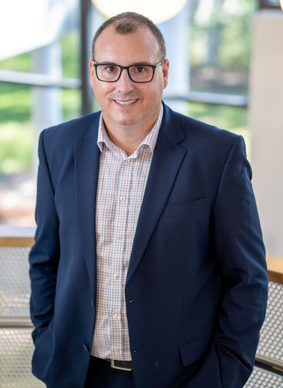
CEO Tim Boyle said, “We've got a lot of momentum in the last 12 months”, and reported stronger conference numbers as its event gets underway in Sydney this week.
He described the new LifeSciences Australia name as “more of a realignment” rather than a reinvention and said it is intended to “represent all of our members.”
At the same time, the ARCS name will be retained as the training and conference brand within a broader LifeSciences Australia ecosystem that brings sub-brands together under a phased rollout and a planned 12-month review.
Professional development and credentialing are central to the strategy.
Boyle said LifeSciences Australia aims to become “the Engineers Australia for the life sciences sector,” building clear and concrete career pathways through a core competency framework, organised colleges, fellows, and an early careers body.
He said the organisation plans to establish Australian colleges in clinical research, regulatory science, and pharmacovigilance and safety, and expects these bodies to “own the professional standards,” working with government and drawing on international models to professionalise roles across clinical research and regulatory practice.
Patient centricity is placed at the heart of standards and programming, said Boyle. He stressed the need for clearer credentialing for clinical research roles where standards are currently fragmented. The organisation will collaborate with the government on regulatory alignment and accreditation pathways while connecting members to international best practice and global networks.
Membership strategy will shift from transactional to transformational to address the “missing middle” of members who might join only for the discounts offered.
Boyle said he wants members to see membership as “core to their professional working life,” improving renewal and long-term engagement through credentialing, organised colleges, community practice, virtual meetups and enhanced member value beyond price incentives.
Voices from across the sector welcomed the change.
Dr Daniela Caiazza, Vice President Clinical Services at Novotech and Deputy Chair of LifeSciences Australia, said Australia's reputation in clinical research is built on individual expertise and collaboration and that as the sector becomes more global the evolution to LifeSciences Australia will “elevate connections between Australian clinical research professionals and the global life sciences sector, creating greater opportunities to share expertise, learn from international best practice and continue raising standards.”
Shan-Shan Wang, Founder and CEO of Roam Technologies, highlighted BioBeacon's role in bridging research, innovation and commercialisation and said under LifeSciences Australia she is “excited to see initiatives like this continue to grow, strengthening Australia's pipeline of future life sciences companies and the industry as a whole.”
Anita van der Meer, Head of Business Development and Partnerships at the Viral Vector Manufacturing Facility, said no single profession can deliver healthcare innovation alone and called LifeSciences Australia a “stronger platform to bring these communities together,” creating greater opportunities to share knowledge and build cross-discipline collaboration.