When Prospection co-founder Dr Peter Cronin looks back on the company’s origins in 2012, he recalls a vision that has not changed, which is to bring advanced analytics and artificial intelligence to healthcare.
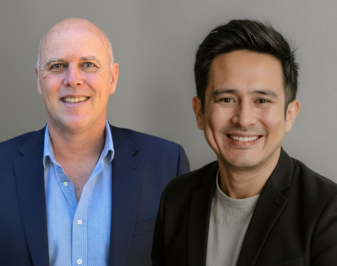
Speaking alongside his colleague, Vishal Kapoor, at the AI Health Summit, Cronin described Prospection’s journey from a small Australian startup to a company working with leading pharmaceutical firms across more than 100 therapy areas. The conversation quickly broadened from company history to a critical question. Why, despite growing capability, does Australia remain so limited in its access to health data?
Cronin said every major health report, from the Digital Health CRC to state health reviews, has highlighted the need for better data. Yet the structures to support innovation remain fragmented. “To build a flourishing ecosystem, you need three things. They are data, capability, and infrastructure,” he said. “But even with those in place, success depends on the human element, which is collaboration, trust, and leadership.”
He traced the history of data access in Australia, from early use of the PBS 10 per cent dataset to the 2016 episode when a linked PBS–MBS dataset was released publicly and quickly withdrawn after privacy concerns. “It was an unfortunate and embarrassing bureaucratic error,” he said. “It set us back as a country for years. For governments, data became synonymous with risk.”
That setback, Cronin said, still shapes how health data is managed. While the COVID-19 pandemic compelled governments to utilise their own datasets more effectively, broader access remains limited, particularly for the life sciences sector. “We’ve seen progress through national population datasets like the AIHW’s Health Data Hub and new initiatives,” he said. “But access remains slow and patchy. Commercial innovators are often locked out.”
Cronin advocated for a middle ground that strikes a balance between privacy and usability. “If government could provide a de-identified 50 per cent sample in a secure environment, it could unlock huge value, not just for industry but for public health. We’re missing that opportunity.”
Taking the discussion from policy to practice, Vishal Kapoor, Prospection’s head of analytics and Japan operations, illustrated how AI is already transforming healthcare analytics overseas. With global data availability accelerating, he said the industry can now address long-standing problems at scale, including understanding patient journeys, predicting outcomes, and acting early.
“The challenge was never the framework,” Kapoor said. “It was that technology and computing power hadn’t caught up. Now they have.”
He explained how Prospection uses transformer models, the same foundational technology behind ChatGPT, to predict disease progression using longitudinal patient data. In oncology, for example, Prospection’s model was able to identify signals of metastasis in ocular melanoma three to six months before its occurrence. In rare blood disorders, such as paroxysmal nocturnal hemoglobinuria, the model predicted treatment reinitiation months in advance of clinical evidence.
Kapoor said the company focuses on explainable AI and speed, key factors that often limit adoption. “Every prediction our models make can be explained,” he said. “That transparency builds trust. And what used to take six to nine months we can now do in one.”
Asked about rare diseases, Cronin said the challenge is the lack of granularity in available data. “The PBS 10 per cent dataset simply isn’t fit for purpose when patient numbers are so small,” he said. “We’ve worked with groups like Rare Cancers Australia and seen what’s possible when data is made available. But for rare conditions, you need richer, linked datasets, and that’s exactly what’s hardest to get.”
Despite the barriers, Cronin said Prospection remains committed to Australia, even as it expands in Japan and the United States. “We wouldn’t have a business without the PBS 10 per cent. It gave us the foundation. But Australia is missing out. We could be leading the world in using data responsibly for better health outcomes.”
He ended on a note of pragmatic optimism. “Governments see data as risk. But the bigger risk is doing nothing. We can manage privacy and secure our systems. What we need is the leadership to bridge the gap.”